







Frontiers of International Criminal Law and Justice
The Hague, 1 December 2025, 13:15-15:00 (World Forum)
Programme | PS 46 (‘Legal Construction of Common Humanity: Human Agency in a Cosmopolitan War Crimes Law’) | PS 47 (‘Norm Efficacy and Justification in International Criminal Law’) | PS 39 (‘Quality Control in Fraud and Corruption Investigations’) | Related library on quality control in criminal justice | Related library on philosophical foundations of ICL | Statement by Justice Møse | Statement by Dr. Hwang Jun-shik | Statement by Mr. Hernes | Statement by Mr. Willems | Statement by Prof. Stahn | Statement by Dr. Song | Statement by Mr. Ekeløve-Slydal | Statement by Prof. Kreß | Statement by Dr. Nerlich | Statement by Mr. Angotti | Statement by Prof. Zakerhossein | Statement by Prof. Klamberg | Statement by Mr. Bais | Statement by Mr. Sachan | Lexsitus | ICC Legal Tools Database | Three films of the first, second and third segments of the event | 260123-24 CILRAP roundtable on The Value of ‘Unity of Humankind’ in International Law Discourse

This CILRAP event – co-sponsored by Korea, Norway, Sweden, the European Anti-Fraud Office and others – explored developments in three frontiers of international criminal law and justice: knowledge synergies between war crimes, fraud and corruption investigations; deepening the Cosmopolitan or philosophical rationale behind war crimes accountability; and strengthening international criminal law knowledge in Persian-speaking countries. Chaired by Professor and Head of School Olympia Bekou (University of Nottingham), Justice Erik Møse (former Judge, Norwegian Supreme Court, ICTR (also its President) and ECHR) opened the event by noting that “in challenging periods, it is essential to defend this precious legal system that has been constructed, step by step, for a long time”, the International Criminal Court (‘ICC’) being an “indispensable institution that has produced valuable case-law, making a significant contribution to accountability”. The event offered “a distilled overview of several topics examined in depth by teams, authors and other contributors” to CILRAP’s activities, “illustrat[ing] that CILRAP is at the cutting edge of conceptual development in this field”.
H.E. Julius Liljeström (Swedish Ambassador to the Netherlands) observed that “serious violations of international humanitarian and human rights law, including attacks on civilians, forced displacement, as well as sexual and gender-based violence” are visibly on the rise, and are “in many cases coupled also with fraud and corruption, [which] weaken institutions and further fuel instability”. He stressed the importance of international co-operation with the ICC and “all initiatives to strengthen national jurisdictions, which, of course, bear the primary responsibility for delivering justice”.
Dr. Hwang Jun-shik (Director-General, International Legal Affairs Bureau, Korean MFA) underlined that “diverse perspectives and broad participation are critical to a robust international justice system”, and expressed confidence that “the works launched [at the event] will contribute to the evolution of international criminal law – expanding its reach, deepening its foundations, and strengthening its impact”.
Director Øyvind Hernes (Head of the Section for International Criminal and Humanitarian Law, Norwegian MFA) noted that Norway “made the first financial contribution for the original technical development of Lexsitus, later supplemented by contributions from the International Nuremberg Principles Academy, North-American foundations, and others”, and “subsequently contributed towards the completion of both Arabic Lexsitus and the first phase of Persian Lexsitus”. It was “therefore very reassuring to see the seriousness and determination with which the Lexsitus Team has continued the development work, making today’s release of Lexsitus 3.0. possible”. Norway was also pleased to see that CILRAP’s Quality Control Project “has expanded to include fraud and corruption, as the contours of a process to draft a statute for an International Anti-Corruption Court may be emerging”.

Fraud and Corruption in the Orbit of International Criminal Justice (film)
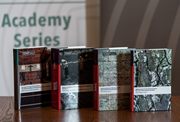
The anthology Quality Control in Fraud and Corruption Investigations (288 pp.) was launched at the event, the book forming part of CILRAP’s wider ‘Quality Control Project’ and painstaking efforts over several years to enhance quality in work-processes of criminal justice for international crimes. Its publication coincides with the drafting of a statute of the proposed International Anti-Corruption Court. Two of the book’s editors presented salient points.
Mr. Tom Willems (European Anti-Fraud Office (OLAF)) pointed out how fraud and corruption cause, enable and contribute to ICC crimes. He shared an important insight following over 30 years in the field: “regardless of the regulatory framework, the hierarchical control and the review mechanisms put in place, at the end of the day, the individual decisions of [the investigator] will be decisive for the outcome of the case. […] It was hence with great interest that I discovered, and soon with great respect that I read the ‘Quality Control’ series of CILRAP [“a prestigious series appreciated throughout the world”], addressing in scientific terms phenomena I had been witnessing throughout my career”. He explained that the new book takes a step back from concrete cases and reflects on concepts used, processes, decision points, and research that informs us “how to ‘think better’” in investigations. The findings suggest that “procedures and processes should be designed to mitigate the limitations inherent to human cognition, but that these rules should not become overbidding and prevent the individual investigator from applying sound judgment. The latter is marked by open-mindedness, critical self-reflection and awareness of the cognitive pitfalls. If already we can bring investigators to acknowledge this, this would significantly contribute to the ‘culture of quality’ upheld by professors Bergsmo and Stahn as leading principle”. He thanked senior management of the European Anti-Fraud Office (OLAF) and the European Public Prosecutor’s Office (EPPO) for “having trusted their staff to contribute to this book” independently, the authors, and his co-editors Antonio Angotti, Darren Frey and Carsten Stahn.
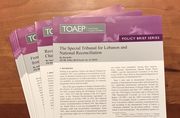
Professor Carsten Stahn (University of Leiden) remarked that TOAEP’s Quality Control series “now has five books and around 90 chapters. It has brought together more than 100 authors to reflect on innovative ways to analyse, test and re-think core elements of fact-finding, preliminary examination and investigation in criminal matters. […] The volumes have been reviewed in journals, such as the European Journal of International Law, the Nordic Journal of International Law and the Journal of International Criminal Justice”. He reminded us that what unites these volumes is the “attempt to build a culture of critical scrutiny and continuous assessment of working methods and procedures of criminal justice, in order to identify strength and weaknesses, encourage institutional learning or openness for course correction […] – to enable actors to look into the mirror, engage in self-criticism, review their own practices”. Stahn observed that the new volume “shows that the gradual refinement of the working methods of international criminal procedures, which we have seen in so many areas, such fact-finding, evidence and procedure, has positive spillover effects for other fields and professional communities”. He explained several reasons why the new book is equally relevant for international criminal lawyers, including the ongoing initiative towards the establishment of an International Anti-Corruption Court.

Towards a Cosmopolitan War Crimes Theory (film)
The event also launched the monograph Legal Construction of Common Humanity: Human Agency in a Cosmopolitan War Crimes Law (216 pp.) by Dr. Song Tianying (recipient of the Antonio Cassese Prize for the Best Doctoral Thesis in International Law) and the essay collection Norm Efficacy and Justification in International Criminal Law (271 pp.) by Gunnar M. Ekeløve-Slydal (recipient of the 2024 M.C. Bassiouni Justice Award), both published by TOAEP.
Dr. Song Tianying (CILRAP Fellow for Global Values; Member, Steering Group of the Coalition for International Criminal Justice) introduced her book as an effort “to capture an important spirit from a historical period which has driven the project of international criminal justice”. In the first half of the book, she described a cosmopolitan morality which “places a premium on individual agency, rationality and the universality of such assumptions of the individual”. She critically analysed such assumptions of abstract human features in the second half of the book, drawing on social psychology. Specifically, she examined how social relations and concrete environment of war affect the implementation of cosmopolitan law. She invited the audience to “think about a bottom-up approach to Cosmopolitanism, which accounts for human vulnerabilities, irrationalities and conflicting reference systems”. Finally, Dr. Song explained that she used the term ‘legal construction’ in the book title to signal that ‘common humanity’ is “an artifact of law which cannot be taken for granted and always needs to be strived for”.
With reference to the cosmopolitan ideals described in Dr. Song’s book, Dr. Rod Rastan (Chief, Judicial Cooperation Support Section, ICC) noted about the first paragraph of the ICC Preamble: “arguably this consciousness, with its implications for trusteeship and human dignity, ultimately serves as the rationale for creating an international criminal court of potentially global and compulsory jurisdiction. Put differently, if we did not care about what happens to other people in other parts of the world, or they did not care about us, there would be no point to create a criminal jurisdiction that would fight impunity for atrocity crimes around the world – we would only be interested in our own welfare and create, at most, ad hoc mechanisms as the need and political will arose to address our more limited concerns and interests, which might be based on entirely different rationales. A universal mechanism is only justified if we believe the commission of atrocities, in any part of the world, is of concern to us all. Stated in this way, the unreserved acceptance of the oneness of humanity becomes the starting point for international justice”. Rastan described Song’s book as a “call to self-understanding – to see international criminal justice as part of a wider normative enterprise to transform our modes of thinking and action for want of a better world”.
Introducing his new book, Adjunct Professor Gunnar M. Ekeløve-Slydal (Deputy Secretary-General, Norwegian Helsinki Committee; Director, CICJ) highlighted four ways to enhance the impact of international criminal law norms. He first pointed to a factor of persistent relevance: The “integrity and professionalism of ICL institutions and actors are crucial factors. It is more difficult to undermine the ICC if the Court and its representatives are seen as demonstrating high integrity and professionalism”. Secondly, he argued that “ICL norms require the support of many more stakeholders than we typically consider”, asking “how religious leaders can make a difference”. Thirdly, he reminded us of the need for ICC States Parties to do more, pursuant to the “primary duty to prosecute international crimes within their jurisdictions” and the need to “invest in measures to address past crimes that undermine their credibility”. In this connection the book discusses Norway’s efforts to confront past injustices against the Sámi and Romani populations. Finally, his book examines “some key philosophical assumptions of ICL”, including whether perpetrators who are under orders to commit crimes should still be responsible for their actions.
Mr. Wolfgang Kaleck (General Secretary, European Center for Constitutional and Human Rights) focused on Dr. Song's argument that “a cosmopolitan war crimes law, ambivalent, partial and relative moral message is matched by its uncertain effect in practice”, leading to “the overall question, is criminal law the appropriate tool to address these mass atrocities?”. International criminal law’s experience in the past decades is a “very rich experience which goes much beyond judgments”, particularly with regards to a “cosmopolitan practice of war crimes law”, but Dr. Song’s invitations to mitigate one’s expectations are to be appreciated. Mr. Kaleck discussed how three paradigms are needed to advance a cosmopolitan legal practice: “one is confrontation; the second is contextualization; and the third is collaboration”, which requires considering the viewpoints of experts from the Global South and their possible calls for decolonization, including “decolonization of the theory and the dogmatics of law, of the history of law, but also of the practice of law”.
Professor Claus Kreß (University of Cologne; ICJ Judge Ad Hoc), the last speaker in Segment 2, observed that the launch of these TOAEP books at an event at the Assembly of States Parties session, is a “sign that State diplomats and other legal practitioners are interested in the ideas of scholars – which is a necessary condition for improving international criminal law and international criminal justice”. Addressing Dr. Song’s new book, he noted that it is “remarkable that, at a moment in time, when authoritarianism and chauvinism have been recovering ground in world affairs, a young scholar has chosen to – most capably – paint an enchanting picture of a cosmopolitan understanding of war crimes law and international criminal law more broadly. That this scholar is of Chinese descent adds a powerful biographic flavour to her argument”. Dr. Song’s “highly stimulating book […] points to pathways potentially leading to re-enchantment, through an attempt at reconciling due consideration of the individual soldier’s immediate ‘cognitive environment’ with the existence of universal legal standards”. Kreß also highlighted the readability of her book: “Powerful as her arguments are, the author presents them in a style which is free of the slightest touch of intellectual triumphalism – this significantly adds to the pleasure of reading”.

Launching Lexsitus 3.0. (film)
The third segment of the event saw the launch of Lexsitus 3.0. and an update on the work on the Legal Tools Database (LTD) since CILRAP’s 2 December 2024 event and ongoing developments. Lexsitus 3.0. has enhanced features (such as the ability to hyperlink to specific paragraphs in judgments) and language capacities, including a Persian version (with the full commentary on the ICC Statute and Rules of Procedure and Evidence).
Dr. Volker Nerlich (Head of Chambers’ Staff, ICC Chambers), referring to Lexsitus 3.0. as “a great leap forward”, highlighted three common foundational principles of the LTD, the ICC Case Law Database and Lexsitus: free access (which is “commendable because it ensures that legal information regarding international criminal law does not depend on the user’s financial resources”, he remarked); quality control (their “content is curated and often produced by experts in the field of international criminal justice. If one looks at the contributors to the project, it is difficult not to be impressed: the project has brought together leading academics and practitioners in the field”); and multilingualism (in addition to English, Lexsitus has been made available “in French, Arabic, Chinese, Russian, and Spanish – all official languages of the UN and of the ICC. Today marks the launch of the Persian language version of the database. This is an important step, for if international criminal law is to be truly universal, it must be accessible to as many people as possible – and languages can still be a steep barrier in this regard”). Nerlich pointed out that Lexsitus is “important not only to spread knowledge about international criminal law”, but “also essential to achieve the objectives of the Rome Statute”, being an “essential tool” by providing “domestic prosecution authorities, defence and victims’ counsel, and courts” free access “to reliable legal information in multiple languages”.
Mr. Antonio Angotti (Co-ordinator, Lexsitus) announced the launch of Lexsitus 3.0., “with greatly enhanced multi-language capabilities”: the complete Persian Lexsitus, a partial Russian translation, an enriched Spanish Lexsitus (with the environment, menus and Elements Digest), and a rudimentary Chinese Lexsitus (environment and menus), in addition to English, French and Arabic. Lexsitus 3.0. allows users to “hyperlink to individual paragraphs of judgments, thanks to the new Digests, which give an individual Internet identity to individual paragraphs in judgments, for each of the more than 10,000 excerpts of jurisprudence that the Digest host”. The Digests have been upgraded and updated, each with more than 20 international decisions and, importantly, numerous national decisions. The new back-end gives content sub-teams autonomy to change and update Lexsitus themselves.
Professor Mohammad H. Zakerhossein (Tehran University) shared that Persian Lexsitus is “a project that is very close to my heart”, having worked on the project in stages since 2018, with “a small but deeply dedicated team of Iranian scholars and students. With limited resources but great motivation, we worked patiently and persistently, fully believing in the value of what we were building”. He thanked the team members, in particular his “dear colleague Dr. Fereydoon Jafari”. “Persian Lexsitus supports legal communities in Afghanistan and Tajikistan and is especially meaningful in Iran, which is not a State Party to the Rome Statute yet”, he remarked, noting that “Iran is still in the early stages of developing its engagement with international criminal law. However, interest in international justice has grown, among scholars, students, and even policymakers”. His description of the situation in Iran rings true for many countries in the world: “Although Persian-language resources are increasing in my home country, they remain limited. Financial constraints restrict access to international books, journals, and databases – leaving many universities without physical or digital resources. Moreover, English is still not widely mastered among students. Persian Lexsitus bridges this gap by offering a trusted and structured reference in Persian for studying, teaching and researching international criminal law, and ensuring no student regardless of their location is left behind”. At the University of Tehran, “many students have already benefited from Lexsitus. They use its lectures and commentaries to learn, conduct research, and better understand the ICC’s legal framework. […] Next year, our university will launch – for the first time – a Master’s programme in international criminal law. This will train Iran’s first generation of experts in the field, and Persian Lexsitus will be an essential academic and learning tool in that process. This programme and this platform will shape how global criminal justice is taught and one day practised in Persian”.
Professor Mark Klamberg (Stockholm University), Co-Director of Lexsitus and Chief Editor of the commentary in Lexsitus, reinforced the importance of “multilingual capacities – most recently Persian”: “By making the legal framework of the Court available in a comprehensive, navigable and freely accessible way, Lexsitus 3.0. broadens participation in global justice conversations and makes specialized knowledge less dependent on location, institutional affiliation, or financial means”. He described Lexsitus as “a ‘one-stop shop’ for core ICC legal materials, with structured learning streams, expert lectures, case law, and commentary, designed to support both teaching and practitioners. It is a platform that integrates academic knowledge with the operational needs of investigators, prosecutors, defence counsel, and judges. In that sense, it represents a genuine bridge between research and practice – an example of how international criminal law can be made more intelligible, more transparent, and more usable”. The CLICC commentary in Lexsitus “complements this mission. It is an article-by-article commentary on the Statute and the Rules, written by leading scholars and practitioners, peer-reviewed, and kept open-access. The goal is not only to provide doctrinal clarity, but to support the consistent interpretation and application of the Court’s legal framework. As Chief Editor, I have seen first-hand how much work goes into maintaining its quality. It is an ongoing effort that depends on a collaborative ethos across languages and legal cultures” – this “community of contributors, reviewers and translators has ensured that these resources retain scholarly rigour while remaining accessible to practitioners, students and researchers around the world”.
Mr. Devasheesh Bais (Deputy Co-ordinator, Legal Tools Database) explained that the LTD – the “primary legal information resource for the international criminal law community” – now contains more than 345,000 documents, enjoys more than 55 million annual hits, and that the integral ICC Case Law Database has more than 18,000 legal findings. “This year alone, we added hundreds of universal jurisdiction cases from several countries, with substantial growth in our German collection”, he observed, and “we significantly enlarged our international peace agreements sub-collection with more than 2,000 new documents”. He thanked users “for continuing to rely on the ICC Legal Tools Database in your work. […] The LTD is a digital public good and it belongs to the entire international community. CILRAP is proud to manage this common public good for a broad user community. I personally as Deputy Co-ordinator of the LTD, am very satisfied to be contributing to this service. We remain committed to make the LTD bigger, better and increasingly useful”.
Mr. Saurabh Sachan (Head, Mithya Labs), the technical developer of Lexsitus and the LTD (including CLD) in its current form, acknowledged the “years of scholarship [Lexsitus 3.0.] represents”, but that his concern was “where Lexsitus can go next […] in a world where intelligence itself is becoming computational and widely available”. He explained that CILRAP is working to imagine the next horizon for Lexsitus, “one built on three commitments”: “First, an AI assistant grounded entirely in truth”; second, “rigorous guardrails and verifiable reasoning”; and third, the “eventual transition toward agentic workflows”. The vision is to “amplify the expertise that already exists”.
This side-event to the 24th Session of the ICC Assembly of States Parties was convened by the Centre for International Law Research and Policy (CILRAP), and co-sponsored by Korea, Norway, Sweden and the European Anti-Fraud Office (OLAF), as mentioned above, as well as the Stockholm Centre for International Law and Justice, Grotius Centre for International Legal Studies, Human Rights Law Centre (University of Nottingham), Institute for International Peace and Security Law of the University of Cologne, Clinique de droit international pénal et humanitaire (Université Laval), Coalition for International Criminal Justice (CICJ), European Center for Constitutional and Human Rights, and the Norwegian Helsinki Committee. CILRAP thanks these institutional partners, the speakers and Chair, and all contributors to the projects that were presented at the event.